

Types of Food Service in the Hospitality Industry
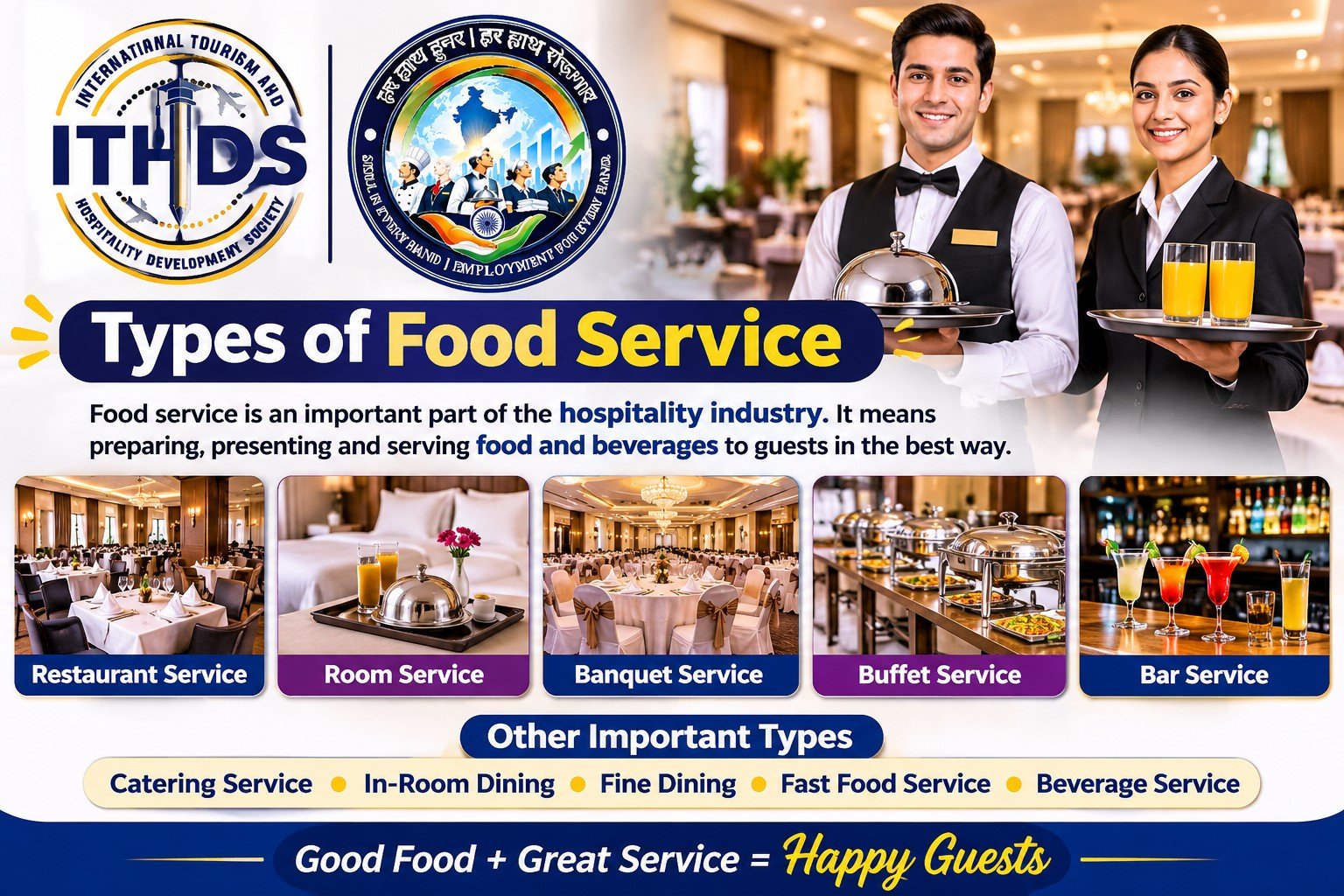
Food service is one of the most important parts of the hotel and hospitality industry. It is all about preparing, presenting, and serving food and beverages to guests in a professional and friendly manner.
Whether we visit a luxury hotel, restaurant, café, resort, or attend a special event, food service plays an important role in creating a good guest experience.
There are different types of food service followed by hotels and restaurants. Each type has its own style, service method, and importance.
1. Main Types of Food Service
Types of Food Service in the Hospitality Industry
1. Table Service
Table service is a common type of food service in hotels and restaurants. Guests sit at a table, and trained staff take their orders and serve food directly to them.
Examples: Fine dining restaurants, luxury hotels and family restaurants.
2. Buffet Service
In buffet service, different food items are arranged on a table or counter. Guests can choose their favourite dishes and serve themselves.
Examples: Hotel breakfast, wedding functions and special events.
3. Self-Service
In self-service, guests collect their food and beverages from a counter without waiting for a waiter to serve them.
Examples: Food courts, cafeterias and college canteens.
4. Room Service
Room service allows hotel guests to enjoy food and beverages in the comfort of their rooms. Guests can place their orders through the telephone or hotel ordering system.
Examples: Breakfast in the room, dinner orders and late-night food service.
5. Cafeteria Service
Cafeteria service is a simple and quick method of serving food. Guests select food from a counter and pay before or after collecting their meals.
Examples: Schools, colleges, offices and hospitals.
6. Banquet Service
Banquet service is provided for special occasions and large gatherings. Food is served to guests during weddings, conferences, birthday parties and other celebrations.
Examples: Wedding receptions, corporate meetings and hotel events.
7. Fast Food Service
Fast food service focuses on preparing and serving food quickly. It is suitable for customers who want a quick meal.
Examples: Burgers, pizzas, sandwiches and French fries.
8. Takeaway Service
Takeaway service allows customers to order food, collect it from the restaurant and enjoy it somewhere else.
Examples: Restaurant takeaway counters and food delivery orders.
2. Importance of Food Service in Hotels
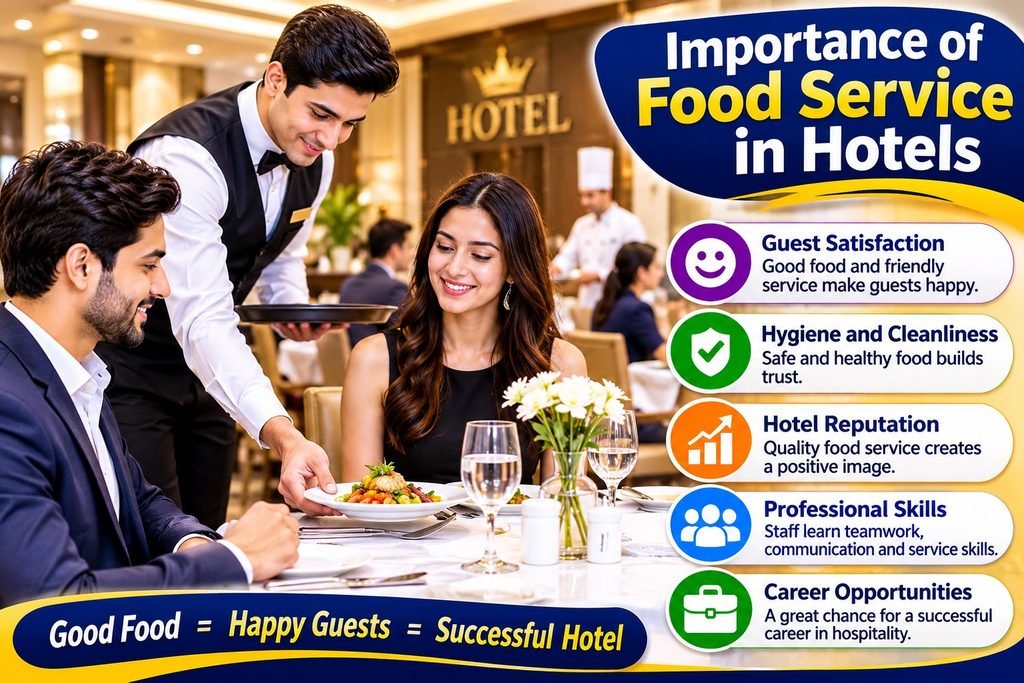
Food service is important because it helps hotels provide a comfortable and enjoyable experience to their guests.
- Guest Satisfaction: Good food and friendly service make guests happy.
- Professional Skills: Staff learn communication, teamwork and customer-handling skills.
- Hygiene and Cleanliness: Proper food handling keeps food safe and healthy.
- Hotel Reputation: Quality food service creates a positive impression of the hotel.
- Career Opportunities: Food service offers job opportunities in hotels, restaurants, resorts and catering businesses.
3. Skills Required for Food Service Staff
A successful food service professional should have:
- Good communication skills.
- Personal grooming and hygiene.
- Knowledge of food and beverages.
- Teamwork and coordination.
- Time management.
- Customer service skills.
- Positive attitude and patience.
4. Career Opportunities in Food Service
Students interested in the hospitality industry can explore different career options, such as:
- Restaurant Captain
- Food and Beverage Associate
- Waiter or Steward
- Restaurant Supervisor
- Banquet Staff
- Restaurant Manager
- Food and Beverage Manager
Conclusion
Food service is more than just serving food. It is about making guests feel comfortable, respected and satisfied. Every type of food service has its own importance in the hospitality industry.
Learning different food service methods helps students develop practical knowledge and build a successful career in hotels, restaurants, resorts and catering businesses.
At International Tourism and Hospitality Development Society (ITHDS), students can learn about hospitality operations and develop the practical skills needed to grow in the hotel industry.